
News
Farthing Value Guide: History, Rarities and What Yours Is Worth
What is an old farthing actually worth? It's a question we get asked a lot, and there's no single answer. It depends entirely on which one you have.
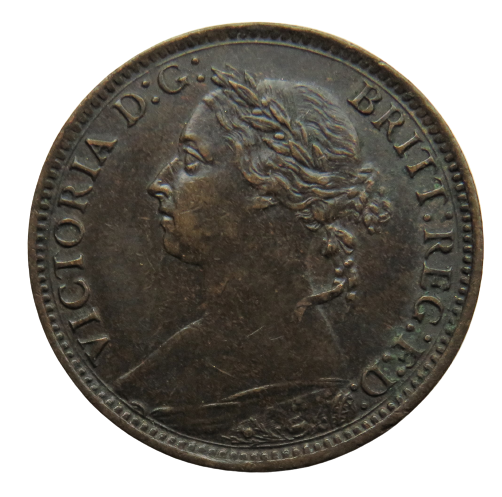
Farthings have been around since medieval times, when they were simple hand-cut quarters of a silver penny. Those early pieces are a specialist area in their own right, and aren't covered in this guide. What we're covering here are the milled, machine-struck farthings that make up the vast majority of what's still around today, struck almost continuously from 1672 to 1956. Across those three centuries they passed through a dozen reigns, two different metals, and two broad reverse designs, Britannia and the wren, each re-cut and adjusted a little from monarch to monarch.
Within that later period, values vary hugely. Some farthings are worth a few pence. A handful are worth tens of thousands of pounds. This guide covers both ends of that range, along with the history behind them, so you can work out where your coin sits.
Contents
- What is a farthing?
- A short history of the farthing
- How to identify your farthing
- Farthing values by reign
- The rarest and most valuable farthings
- What affects a farthing's value
- How farthings are graded
- Farthings vs halfpennies and pennies
- Caring for and storing your farthings
- Buying and selling farthings
- A quick checklist before you value your farthing
- Farthing value FAQs
What is a farthing?
A farthing was a British coin worth one quarter of an old penny. The name comes from the Old English feorthing, meaning "fourth part", and the coin did exactly that job for the best part of seven centuries. Hand-cut quarters of silver pennies served as farthings from as early as the 13th century, but the farthing most collectors encounter today is the milled, machine-struck version that ran from 1672 to 1956.
Forty-eight farthings made a shilling, and 960 made a pound, which gives some sense of just how small a unit it was. By the time production stopped, a single farthing bought almost nothing at all, which is exactly why it was eventually withdrawn from circulation.

Obverse (left) and reverse (right) of an 1884 Victoria bronze farthing.
A short history of the farthing
It's easy to overlook just how long the farthing was around. By the time it disappeared, it had outlasted the reigns of twelve different monarchs and quietly survived two world wars, several currency reforms, and centuries of inflation that should have retired it far sooner.
Early farthings. Before 1672, farthings were usually silver pennies cut into quarters rather than struck as a coin in their own right, a practical solution in an age when striking something that small wasn't always cost-effective. Charles II's reign changed that in 1672, introducing the first proper milled copper farthing, with a seated Britannia on the reverse, a design that would run almost unbroken for the next 264 years. This was the same period that introduced milled (machine-struck) coinage more broadly across the currency, replacing the old hammered method and making coins far harder to clip or counterfeit.
Copper era, 1672 to 1860. For nearly two centuries the farthing was struck in pure copper. It passed through the reigns of Charles II, James II, William and Mary, William III, Anne, George I, George II, George III, George IV, William IV, and the early years of Victoria. Some years saw huge mintages of common coins; others produced great rarities, most famously the farthings of Queen Anne. Production wasn't always continuous. There are notable gaps, including a long stretch in the mid-18th century and again in the early 19th century, when the Royal Mint simply didn't strike farthings at all for a period, usually because existing stock was judged sufficient to meet demand. Even with those gaps, the run from 1672 to 1956 counts as almost continuous by the standards of a 700-year-old coin.

1822 King George IV copper farthing.
George III and the Soho Mint. George III's reign saw the start of industrial coin production. Matthew Boulton's steam-powered Soho Mint in Birmingham was contracted to strike farthings from 1799, using the same steam-press technology that had already transformed penny and twopence production. It's a coin that marks the shift from craft to industrial minting in British coinage.
Bronze era, 1860 to 1956. In 1860 the farthing switched to bronze, a mix of copper, tin and zinc, matching the change made across the whole "bun penny" coinage (named for Victoria's hairstyle on the obverse). Bronze farthings are generally more plentiful than their copper predecessors and easier to find in higher grades, though early condition still commands a premium. Farthings from this period onward were struck at the Royal Mint in London, with additional striking at Birmingham's Heaton Mint identified by a small "H" mintmark beneath the date.

1884 Queen Victoria bronze farthing.
The "darkened" farthings, 1897 to 1918. For roughly two decades, farthings were deliberately chemically darkened at the mint before release, to stop the public confusing them with the similarly sized half sovereign. Collectors today prize farthings from this 1897 to 1918 period in their original dark state, since a "brightened" example of one of these dates has usually been cleaned, which reduces rather than improves its value.

A farthing from the 1897 to 1918 "darkened" period, showing the original toned surface.
The wren farthing, 1937 to 1956. From 1937 the long-running Britannia reverse was replaced by Harold Wilson Parker's wren design, Britain's smallest bird on Britain's smallest coin. It is a design many collectors remember fondly, and it remained in use until the farthing's final year of production in 1956.

1939 King George VI farthing, wren reverse design.
The end of the farthing. By the 1940s and 1950s, inflation had eroded the farthing's purchasing power to almost nothing, and the coin was already rarely used in everyday transactions. The Royal Mint struck its last farthings in 1956, and the coin was formally demonetised on 31 December 1960, ending its life as legal tender after almost three centuries of production.
How to identify your farthing
Before working out value, it helps to know exactly what is in your hand.
The date. Start here. Most farthings have a clear, readable date, and that alone narrows things down straight away, both the reign and the values below. It's only when a coin is worn enough that the date is hard to read that you need the other checks below to work out roughly when it was struck.
The monarch's portrait. The obverse carries the reigning monarch, which narrows down the date range immediately. Farthings exist for every monarch from Charles II to George VI, plus a short run under the young Elizabeth II, but there is no farthing for Edward VIII, for reasons covered below.
The reverse design. From 1672 to 1936, look for a seated Britannia. From 1937 to 1956, look for the wren. This split is a fast way to work out roughly which era you are dealing with before checking dates more closely.
Size. A copper farthing (pre-1860) is slightly larger than the bronze farthings that followed, typically around 22 to 23mm across depending on the exact date. A bronze farthing (1860 onwards) is smaller, at around 20mm. If you are trying to tell a farthing apart from a halfpenny, size is the quickest check: a bronze halfpenny is noticeably larger, at around 25mm.
Weight. A copper farthing (pre-1860) weighs around 4.65g. A bronze farthing (1860 onwards) is lighter, at around 2.83g. Weight is worth checking alongside size if you are ever unsure. A coin that's noticeably lighter than these figures is almost always just heavily worn.
Metal and colour. Pre-1860 farthings are pure copper and tone to a warm chocolate brown over time. Post-1860 farthings are bronze, which can retain a reddish colour in high grade or tone to brown with wear and age.

George IV copper farthing (left) next to a Victoria bronze farthing (right), showing the size and colour difference between the two metals.
Farthing values by reign
The table below is a guide to typical retail prices only. Think of it as what you might expect to pay a dealer, not a guarantee of what a specific coin will fetch when you come to buy or sell. Figures for Fine and Extremely Fine are based on published guide prices in Coin News magazine (Token Publishing Ltd), with the rarer material cross-checked against realised results from Spink and Noonans auctions. Condition has the biggest effect on price, but individual years within a reign vary too, some had far smaller mintages than others, and small differences such as a mintmark or a re-cut date can push a coin above the range shown (see what affects a farthing's value below). See our farthings for sale for what is currently available.
| Reign | Years | Fine | Extremely Fine | Worth knowing |
|---|---|---|---|---|
| Charles II and James II | 1672 to 1687 | £45 to £220 | £850 to £3,250 | Early copper farthings, genuinely scarce in any grade. James II material generally trades above Charles II. |
| William and Mary, William III | 1689 to 1700 | £35 to £300 | £800 to £3,000 | Scarce across the board, with the earliest joint-reign issues at the top of the range. |
| Queen Anne | 1714 only | £425 | £1,500 | Figures are for the common "Britannia" pattern. The rarer Peace and Drapery patterns trade for considerably more, see the next section. |
| George I and George II | 1717 to 1754 | £10 to £200 | £220 to £1,400 | George I material generally commands more than the more plentiful George II farthings. |
| George III | 1754, 1771 to 1807 | £3 to £25 | £60 to £300 | Grade has more influence on value across this range than any individual date. |
| George IV and William IV | 1821 to 1837 | £5 to £8 | £60 to £70 | Uncirculated examples reach £150 to £300, and proof strikings into the hundreds. |
| Victoria, copper era | 1838 to 1860 | £4 to £15 | £30 to £150 | Transitional and error varieties such as 1843, 1844 and 1849 run well above this range. A proof 1860 farthing, struck at the changeover to bronze, realised £11,000 at auction in 2013. |
| Victoria, bronze era | 1860 to 1901 | £1 to £5 | £16 to £70 | 1869 and Heaton Mint (H mintmark) dates sit toward the top of the range. |
| Edward VII | 1902 to 1910 | Low value | Genuinely worn examples have little individual value beyond a few pence and are usually sold in bulk lots. Presentable circulated coins run £1 to £10, rising to around £25 to £80 for the best uncirculated examples. Darkened surfaces are original, not a fault. | |
| George V | 1911 to 1936 | Low value | Genuinely worn examples have little individual value beyond a few pence and are usually sold in bulk lots. Presentable circulated coins run £1 to £8, low double figures uncirculated. Common throughout the reign. | |
| George VI | 1937 to 1952 | Low value | Genuinely worn examples have little individual value beyond a few pence and are usually sold in bulk lots. Even top condition tops out at a pound or two. One of the most commonly found farthings. | |
| Elizabeth II | 1953 to 1956 | Low value | Genuinely worn examples have little individual value beyond a few pence and are usually sold in bulk lots. Presentable examples reach a pound or two, and the 1953 Coronation year is worth more as a boxed proof. | |
The rarest and most valuable farthings
A handful of farthings sit well outside the ranges above, and it is worth knowing them by name.
No farthing was ever issued for Edward VIII, one of the more surprising gaps in the series. He abdicated in December 1936 before his coinage entered circulation, so pattern strikes were prepared but never officially released. Fewer than ten examples are believed to survive, mostly held in institutional and major private collections. No Edward VIII farthing pattern has come up at auction that we're aware of, but related denominations from the same pattern sets give a sense of the scale: a pattern penny realised £133,200 at Spink in 2019, and a pattern halfpenny made $180,000 at Heritage in 2025. A farthing from the same series would likely fall well into five figures if one surfaced.
The 1714 Queen Anne farthing. This is the single most famous farthing in the series. Anne died in August 1714, shortly after the coin's minting began, and a persistent 19th-century myth claimed only three examples were ever struck, and that finding one would make the owner a fortune. In reality, several thousand exist across a handful of pattern types, including the "Britannia" type, a rarer "Peace" type, and a "Drapery" variant. Coin News guide prices put the common Britannia type at around £425 in Fine and £1,500 in Extremely Fine. The rarer Peace and Drapery patterns trade considerably higher, into the thousands and occasionally beyond £10,000 for exceptional examples. Reproductions are common, so weight and diameter checks matter here more than almost anywhere else in the series.
The 1860 proof farthing. Struck at the transition from copper to bronze, a proof example of this date realised £11,000 at auction in 2013, reflecting both its historical significance and its scarcity in top condition.
Victorian proof farthings. A number of proof strikings across Victoria's reign, struck for collectors and officials rather than circulation, command strong premiums over their circulating counterparts. Coin News guide prices list the 1839 proof at around £1,000 and the 1853 proof at around £1,400, and the scarcest bronze proofs have gone well beyond that at auction. Results from major UK auction houses such as Noonans and Spink give a useful benchmark here, since proof and pattern farthings rarely change hands outside of specialist sales.
How farthings are graded
Grading is what turns "this looks old" into an actual value, and it's worth getting familiar with the basic terms before you compare your coin to the ranges above:
Poor to Fair. Heavily worn, date may be barely readable. Little collectable value beyond the metal and the story.
Good (G). Worn smooth in the main design areas, but the date and main features are identifiable.
Fine (F). Moderate wear throughout, but all major details are clear and the coin is pleasant to handle.
Very Fine (VF). Light wear confined to the highest points of the design. A popular grade for collectors who want a presentable coin without paying top prices.
Extremely Fine (EF). Minimal wear, most fine detail still sharp. This is where values start climbing noticeably.
Uncirculated (Unc). No wear at all, as struck. For bronze farthings, original mint colour (red, rather than toned brown) adds a further premium on top of the grade itself.
Grading is somewhat subjective, and small differences in a coin's condition can move it into a different price bracket entirely.
Farthings vs halfpennies and pennies
Farthings sat at the bottom of a small family of bronze coins that all shared the same basic designs for much of their history. A bronze farthing is around 20mm across, a bronze halfpenny around 25mm, and a bronze penny around 31mm, so the size step between each denomination is easy to spot once you know what to look for. From 1860 to 1936, all three carried the same seated Britannia reverse and differed mainly in size and inscription. From 1937, the farthing gained its wren while the halfpenny switched to Sir Francis Drake's ship, the Golden Hind, making the two easy to tell apart even without checking the size. If you're building out a collection across denominations, our pre-decimal coins collection covers halfpennies and pennies alongside the farthing.

Farthing, halfpenny and penny grouped together, showing the size difference between the three denominations.
What affects a farthing's value
Condition. As with any coin, grade drives price more than almost anything else. A farthing graded Fine might be worth a fraction of the same date in Extremely Fine or Uncirculated condition.
Colour, for bronze farthings. Mint-state red bronze is scarcer and more desirable than the same coin toned to brown, since the original colour rarely survives more than a century of handling and storage.
Rarity of date or variety. Some years had far smaller mintages than others, and minor die varieties (an extra stop, a different mintmark, a re-cut date) can separate a common coin from a genuinely scarce one.
Authenticity. Given how well-known the 1714 Queen Anne farthing is, reproductions circulate. A quick first check is a magnet: genuine copper and bronze are not magnetic, so any pull at all means the coin is plated over steel. It is a useful first test, though not a guarantee on its own, since a well-made fake may use a non-magnetic base metal too, so weigh the coin against the figures above as well. If in doubt on a higher-value coin, professional grading is worth the cost.
We would always encourage getting a second opinion before assuming a coin is one of the rarities above, since the difference between a common date and a genuine rarity often comes down to small details.
Caring for and storing your farthings
It's normal not to know the right way to handle an old coin, especially one that has been sitting in a drawer for decades. A few simple habits protect value:
Handle by the edges. Fingerprints and oils from skin can mark copper and bronze permanently over time.
Never clean a coin. Cleaning, even gently, removes original surface and toning, and can turn a collectable coin into a much less desirable one. If a coin looks dull, that is usually original ageing, not dirt.
Store in acid-free holders. Coin flips, capsules, or archival-quality albums protect against further wear and tarnishing far better than a tin or a drawer.
Keep away from damp. Moisture accelerates toning and can encourage verdigris (green corrosion) on copper and bronze coins, which is very difficult to remove safely.
Buying and selling farthings
Whether you are starting a date run, chasing a specific reign, or trying to identify what has turned up in a family collection, farthings remain one of the most approachable ways into British coin collecting. Common dates are inexpensive enough to buy in bulk while learning to grade, while the key rarities give even experienced collectors something to chase.
Buying. Reputable dealers, established auction houses, and specialist coin fairs are generally the safest routes, particularly for anything above a few pounds in value. We stock a wide range of farthings ourselves, from common circulated dates through to scarcer types, so it's worth a browse of our farthings for sale if you're after a particular reign or date. Marketplace listings can be worth exploring for common dates too, but authenticity and grading claims are harder to verify at a distance.
Selling. Many farthings, particularly high-grade or rare examples such as the 1714 Queen Anne type or scarce Victorian proofs, sell well through a specialist auction house such as Baldwin's, Spink or Noonans, since it reaches collectors who understand exactly what they're bidding on. For common dates and average-condition coins, a dealer, us included, can usually give you a straightforward idea of value and a fair offer without the time and fees involved in a specialist auction.
Getting a valuation. If you think you may have something scarce, it's worth getting it properly looked at before deciding what to do with it. We're always happy to help identify and value farthings, whether you're looking to add to a collection or find out what an inherited coin might be worth.
Getting in touch with us. Before sending photos over, it's worth running through the checks in this guide first: the date and reign, the metal and size, and the condition against the grading terms above. If your farthing matches one of the common dates in the values-by-reign section, it's likely already within the ranges given there. If you've been through those checks and still think you may have one of the scarcer types covered in this guide, an early Charles II or James II farthing, an 1860 proof, or anything resembling the 1714 Queen Anne pattern, feel free to send it over and we'll take a look. A couple of clear photos (both sides, plus the edge) is usually enough for us to give you an initial steer.
A quick checklist before you value your farthing
- Check the date against the reign ranges above to narrow down the era.
- Check the metal and size, copper (pre-1860, around 22 to 23mm) or bronze (1860 onwards, around 20mm).
- Check the reverse, Britannia (to 1936) or wren (1937 onwards).
- Assess the condition honestly, using the grading terms above as a guide.
- Look for anything unusual, an extra stop, a different mintmark, or a date that stands out as scarce.
- Get a second opinion before assuming you have a genuine rarity, especially for anything resembling the 1714 Queen Anne farthing.
Whatever stage you're at with a farthing, from a curious find to building a full date run, we hope this guide has given you a clearer picture of what you're holding and what it might be worth. And if other coins catch your eye along the way, our wider collection spans pre-decimal, decimal and older British coins, including sets and proofs.
Browse our British Coins collection
Farthing value FAQs
How much is a farthing worth?
Most farthings are worth a few pence to a few pounds in average circulated condition. Mint-state or scarce-date bronze examples can reach £15 to £100. The rarest, such as the 1714 Queen Anne farthing, trade from several hundred pounds up to well over £10,000, and the unissued 1937 Edward VIII pattern would likely fetch well into five figures if one surfaced, based on prices realised for other denominations in the same pattern series.
How much was a farthing worth in old money?
A farthing was worth one quarter of an old penny, or 1/960th of a pound. Forty-eight farthings made a shilling.
What is the rarest farthing?
The 1937 Edward VIII pattern farthing is the rarest, as it was never officially issued and fewer than ten examples are believed to survive. Among issued coins, the 1714 Queen Anne farthing is the most famous rarity.
When was the farthing withdrawn?
The farthing was last struck for circulation in 1956 and formally demonetised on 31 December 1960.
Are farthings worth anything if they're not rare?
Yes, though modestly. Even common-date farthings hold a small collectable value above their face value, typically a few pence to a few pounds depending on condition, and they remain popular as an affordable entry point into coin collecting.
What is a 1919 or 1917 farthing worth?
Farthings from the George V era (1911 to 1936), including 1917 and 1919, are generally common and trade from around £1 to £10 depending on condition, with well-preserved examples at the higher end.
How can I tell if my farthing is old copper or later bronze?
Check the date and colour. Anything from 1860 or earlier is copper; anything after is bronze. Copper farthings are also slightly larger and heavier than their bronze counterparts.
What is a Victorian farthing worth?
It depends heavily on whether it's copper (1838 to 1860) or bronze (1860 to 1901). Copper Victorian farthings typically range from a few pounds up to £30 to £60 in good condition. Bronze Victorian farthings are generally more affordable, from a couple of pounds up to £20 to £30, with scarcer dates and Heaton Mint varieties worth more.
Is a penny-farthing coin worth anything?
There's no such thing as a "penny-farthing coin". A penny-farthing is a bicycle, named after the size difference between its two wheels, which mirrored the size difference between a penny and a farthing coin. If you're trying to value a coin, you're likely after the farthing on its own, which is covered throughout this guide.
Are farthings still legal tender?
No. Farthings were demonetised on 31 December 1960 and haven't been legal tender since. They still hold collectable and, in some cases, significant value, but they can no longer be spent.
What is a 1754 farthing worth?
The 1754 farthing was one of the last farthings struck under George II before a long gap in production. In average collectable condition, it typically trades from around £10 up to £35, with well-preserved examples reaching higher.