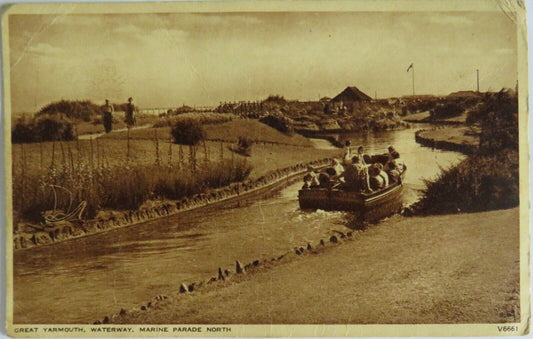
Great Yarmouth built its fortune on herring. By the 14th century the town was already one of the wealthiest in England, and its autumn herring fair drew fishermen and merchants from across the North Sea for centuries afterwards. Once the railway reached Yarmouth in 1844, the town's fortunes shifted again, from fishing port to seaside resort: Britannia Pier opened in 1858 and was rebuilt more than once, including after a fire started by suffragettes in 1914, and postcards from this era captured everything from the pier and Anchor Gardens to the herring boats still working the harbour.
Sandringham has been a private royal home since 1862, when the young Prince of Wales, later Edward VII, bought the estate as a country retreat away from London. Norwich Cathedral, founded in 1096 by Herbert de Losinga, is one of the most complete Norman cathedrals in England, and its spire, added in the 15th century, is the second tallest in the country after Salisbury's.
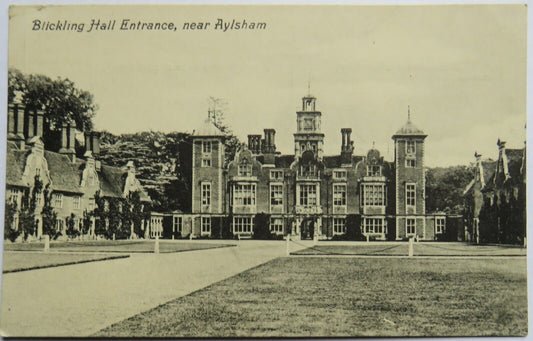
Further west, King's Lynn was one of medieval England's most important ports, trading with the Hanseatic League of northern Europe, and its Trinity Guildhall was rebuilt in the 1420s after a fire and still stands on the Saturday Market Place today. Villages such as Blakeney and Salhouse reflect a quieter side of the county, from Blakeney's silted-up harbour to the waterways of the Norfolk Broads at Salhouse Broad. Other corners of Norfolk are represented too, with new postcards added on an ongoing basis.