News
Postcard Collecting for Beginners: Types, Terms, and Where to Start
Deltiology, the collecting of postcards, is widely considered one of the most popular collecting hobbies in the world, behind coins and stamps. Many people who get into it don't set out to become collectors. Some pick up a handful of vintage postcards at a fair, or find a shoebox of them in a relative's loft. Others just decide postcards look like an interesting thing to start collecting, with nothing prompting it beyond curiosity. Either way, there are a few things worth learning early in your collecting journey, from the topographical versus non-topographical split that shapes how postcards are catalogued, to reading the back of a card properly, where the real clues usually are. This guide covers all of it: the terms you'll keep running into, how to age your postcards, looking after what you buy, and how to actually get started.
Postcard Collecting for Beginners: Types, Terms, and Where to Start
- Why postcards pull people in
- Topographical vs non-topographical
- Other ways postcards get grouped
- Popular subjects and themes
- A few more terms worth knowing
- How to read the back of a postcard
- How old are we talking?
- What actually affects value
- Condition, in plain terms
- Looking after your postcards
- How to actually start a collection
- Where to buy postcards
- Common mistakes new collectors make
Why postcards pull people in
For many, part of the appeal is straightforwardly nostalgic. A postcard of a seaside town or a high street as it looked many decades ago is a genuine window into how a place has changed, in a way a modern photograph can't give you. But the real pull for a lot of collectors is the back of the card, not the front. A postmark is a real date and place, stamped the day the card was actually posted. A message, however ordinary, "having a lovely time, wish you were here", was written by a real person to a friend, a family member, or loved one, and reading it is a small, direct connection to somebody's actual day, many years ago.
Family history research is a separate draw entirely, and a significant one. A card sent by a grandparent or great-grandparent, in their own handwriting and postmarked from wherever they happened to be that day, can tell you more about their life than a photograph ever could: where they were, who they were writing to, sometimes even how they were feeling. Genealogists actively search for postcards for exactly this reason, and many family collections only come to light because someone kept a shoebox of cards passed down through generations, never quite thrown away.
Postcards also sit within the wider world of paper ephemera, the term collectors use for everyday printed items that were never meant to last: letters, tickets, receipts, old documents, and similar. People collect ephemera for much the same reasons as postcards. It's real and it survived by accident rather than design. Postcards have simply built a following and a vocabulary distinctive enough to be worth treating as their own thing, which is what the rest of this guide does.
Topographical vs non-topographical postcards
If you look at how postcards are organised, on auction sites, with dealers, or within collecting circles, and you'll keep running into this one key distinction: topographical and non-topographical.
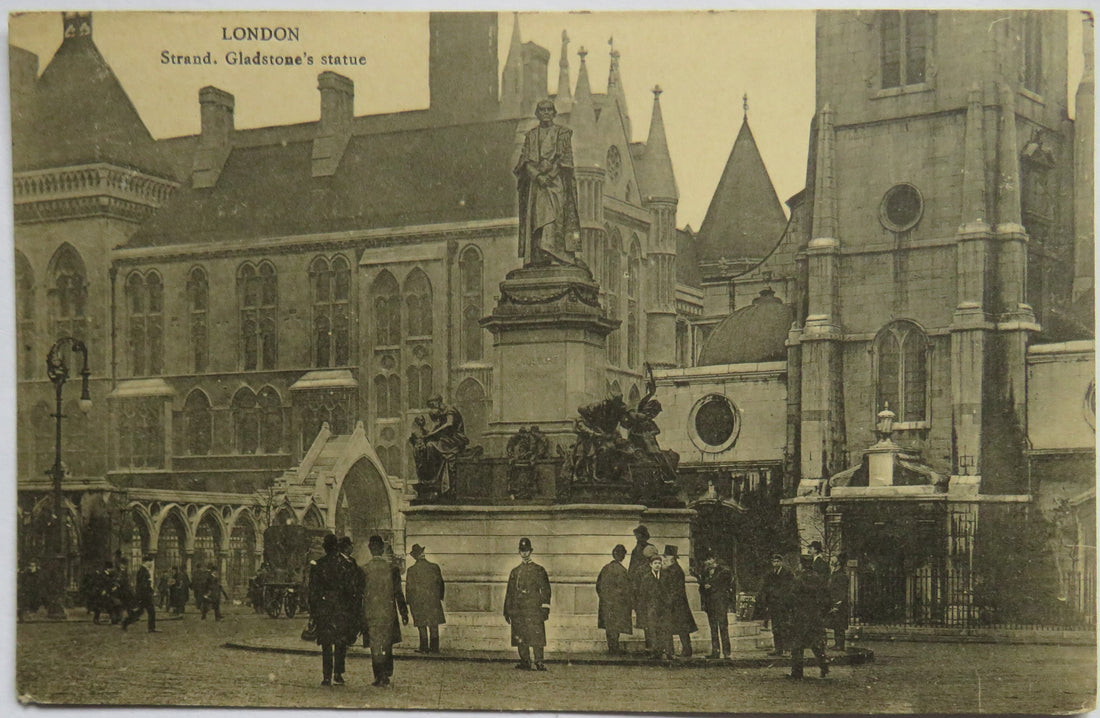
Topographical postcards show a place, whether that's a street, a view, a landmark or a building. A card of Bridlington seafront for example or Durham Cathedral is topographical. UK collectors often shorten this to "topo."

Non-topographical postcards are everything else: comic cards, artist-signed illustrations, military and transport subjects, greetings cards, real photo portraits, and anything organised around a theme rather than a location.

This matters practically, not just as trivia. Topographical collectors usually build by place, whether that's a county, a town, or a specific street or building, and value tends to follow local interest and rarity of view rather than age alone. Non-topographical collecting tends to build by theme or artist instead. Knowing which camp a card falls into tells you how to search for more like it, and helps you build a collection with a clearer sense of direction.
Other ways postcards get grouped
Beyond the topographical and non-topographical split, a few other terms are worth knowing early on, and none of them are complicated once you've seen an example.
Real photo postcards were printed directly from a photographic negative onto photographic paper, giving them a smooth, continuous-tone finish rather than a printed, dotted one. Kodak introduced postcard-backed photographic paper in 1902, and cameras built around postcard-sized film followed soon after, which meant ordinary people, and local photographers, could turn a snapshot straight into a postcard rather than needing a full print run. They were especially popular from the early 1900s through the interwar years, and a lot of the topographical views you'll come across, a local street, a shop, a one-off event, were issued this way.
Printed cards use ink and a printing process instead, which shows up as tiny dots or texture under magnification once you know to look for it. Most of the topographical views produced in bulk for the postcard trade, rather than by a local photographer, were made this way.
Embossed cards have a raised, textured surface, created by pressing the paper with a die during printing. They were especially popular for greetings cards, Christmas, New Year and Valentine's designs among them, through the early 1900s and 1910s, and many of the best examples were printed in Germany, which led the world in colour printing technology at the time.
Multiview postcards combine several separate photos on a single card, often a town's main sights or a seaside resort's key spots, laid out like a small highlights reel rather than one view. They became especially common from the 1950s onwards, once printing made several insets on one card straightforward and affordable, and they're a handy way into a place if you're not yet sure which specific view interests you most.
Artist-signed cards carry a visible signature from the illustrator, and collecting by a specific artist is its own popular corner of the hobby. Donald McGill, best known for his cheeky seaside comic postcards, is one of the most recognised names collectors look for. He started out almost by accident in 1904, designing a get-well card for a sick nephew, and went on to produce an estimated 12,000 designs over the following decades.
Popular subjects and themes
Once you're past the topographical and non-topographical split, subject and theme is where things really open up. Comic postcards use gentle, often cheeky humour, especially seaside ones, and are collected as much for the artist as the joke. Animal postcards, cats and dogs especially, have their own dedicated following, and often blur into comic postcards, since a lot of the appeal is animals behaving like people. Military and transport postcards, ships, trains, aircraft, uniforms, appeal to collectors who are often just as interested in the subject itself as in postcards generally. Greetings postcards, embossed Christmas, New Year and Valentine's designs among them, were often kept rather than posted, which is part of why so many survive in excellent condition.
None of these are mutually exclusive, and plenty of collectors end up with a foot in two or three camps at once, a shelf of local topographical views alongside a small stack of comic cards bought purely because they made them laugh.
A few more terms worth knowing
A handful of other words turn up constantly once you start browsing listings, and they're worth having straight from the start.
Used and unused describe whether a card was posted. A used (or posted) card has been through the post, so it usually carries a postmark, a stamp, and a message. A large proportion of the postcards you'll find for sale, ours included, are unused: many were bought as souvenirs or keepsakes and simply kept rather than posted, so a blank back is common rather than unusual. Neither is automatically worth more than the other, it comes down to what you're collecting for. If the back-of-card connection, the postmark and message, is what draws you in, a used card is usually the more interesting buy.
Publisher and series refer to the company that printed the card and, often, a reference number printed alongside their name, usually along the bottom edge or on the address side. Knowing a publisher's name can help you find more cards from the same set, or work out roughly when a card was produced. Valentine's of Dundee is a good example. They ran long-running series of topographical views across the UK, so spotting their name on the back is often your first clue to which set a card belongs to and what else might be out there to find.
How to read the back of a postcard
For a lot of collectors, the back of a card is as interesting as the front, and it's also where most of the useful information lives. Getting comfortable with what's there makes everything else in this guide easier.
UK postcards had an undivided back, the whole reverse used for the address only, before 1902. Anything written to a friend had to go on the front, awkwardly, around the picture. From 1902 onwards, the divided back became standard: one side for the address, the other for a message, the layout used on virtually every postcard since. Spotting which layout you're looking at is an instant, rough dating clue on its own.


The postmark is the most reliable clue on the whole card. A clear one gives you an exact date, sometimes down to the time of day, plus the sorting office it passed through. Postmarks are often smudged or only partly struck, so it's worth checking under a magnifying glass, or tilting the card under a lamp so the light catches the indentation left by the stamp, to pick out detail you'd otherwise miss.
The stamp narrows things down even without a legible postmark, since each monarch's reign used a distinct design. Where a stamp has been removed, a faint outline or gum shadow can still tell you one was there.
The message, when there is one, is often the real drawn for a lot of collectors. Even a few ordinary lines add a layer the picture alone can't: who sent it, who they were writing to, and what was on their mind that particular day.
Publisher marks and series numbers usually sit along the bottom edge or the address side too, and are covered in more detail in the terms section above.
How old are we talking?
Age is one of the first things new collectors want to know, but it isn't the only thing that decides value, and it isn't always obvious just from looking at a card. The so-called Golden Age of postcards runs from around 1898 to 1920, when huge numbers were printed, many in Germany where the printing technology of the time was considered the best available. Cards from this period are common enough that age alone doesn't make one valuable; subject, condition, and rarity matter more. Much of what you'll come across day to day counts as vintage rather than genuinely antique, though real Golden Age cards pushing past a century old do cross into antique territory, and a few of those turn up too.
What actually affects value
Most collectors aren't in it for the money, and instead build a collection based on what they actually like, rather which postcards will bring them the most return. Still, it's worth understanding what actually affects value, if only so you're not caught out by a card priced well above what it's really worth. Age gets most of the attention, but it's rarely the main factor. A common seaside view from 1910 can be worth less than a scarce street scene from the 1950s, because rarity and subject usually matter more than age on its own. A postcard showing a well known street, a local event, or a place with few surviving images tends to interest collectors more than a generic view that was printed by the thousand. A real photo postcard of a specific place is also often scarcer, and more sought after, than a printed card of the same view, simply because fewer copies existed to begin with.
None of this means you need to chase value from day one. Most postcards are genuinely inexpensive, a few pounds rather than a fortune, and building a collection around what interests you will always matter more than chasing what might be worth something later.
Condition, in plain terms
Condition affects both price and desirability, so it's worth learning to look at a card properly before you buy. Look for corner wear, creasing, foxing (small brown age spots), and whether anything is written on the picture side, since a message on the front, rather than the back where it belongs on a divided-back card, usually lowers desirability more than ordinary age-related wear does. You may also see cards listed as "A/F", short for as found, meaning the seller hasn't tidied up the description and any wear or damage is exactly as it arrived. We photograph both sides of every postcard and note anything you need to know that isn't obvious from the photos, so you can judge condition for yourself before you buy.
Looking after your postcards
Postcards are sturdier than they look, but a little care goes a long way. Store them upright in acid-free, PVC-free sleeves or a sturdy envelope rather than loose in a drawer. Check the packaging carefully, as not all plastic sleeves are suitable for long-term storage. Keep your postcards away from direct sunlight and damp, both of which can cause fading and foxing, and handle them by the edges rather than the printed surface.
None of this needs to be complicated. A shoebox is perfectly adequate for a small collection just starting out. It’s really only when you’re into the hundreds that archival boxes and dividers organised by county or theme start to earn their keep.
How to actually start a collection
The best starting point isn't a place or an era, it's whatever genuinely interests you or brings you joy. If topographical postcards appeal, that might be somewhere you once lived, somewhere your family is from, or somewhere that matters to you for reasons that have nothing to do with postcards at all. If topographical postcards aren't for you, there's no shortage of other directions: comic postcards, if you like the humour, animal postcards, if you're soft for anything with a cat or a dog on it, or postcards of trains, if that's always been your thing. There's no wrong answer here. The only real requirement is that it's something you'll still want to be looking for in six months' time.
Once you've settled on a focus, whether that's a county, a specific artist, or a theme, it gives you a natural boundary to search around and a steady supply of cards to look for. Start with inexpensive, common cards while you get a feel for genuine condition, printing style, and pricing, before spending more on scarcer subjects. Buy from sellers who describe condition honestly and photograph both sides clearly, and don't be afraid to ask questions before you buy. Every collector was a beginner asking those same questions once. None of the terms in this guide are a barrier to getting started either; they're useful once you're a few cards in and want to be more deliberate about what you're buying, not something you need to know before you buy your first one.
Where to buy postcards
We're a good place to start. Our postcards are sorted, dated where we can, and photographed on both sides, which takes a lot of the guesswork out of buying while you're still learning what to look for, and you can browse by country or theme, from English postcards and Welsh postcards through to comical postcards. Beyond specialist sellers like us, postcard fairs are still a classic route in, and a good fair lets you handle cards in person before you buy which is worth doing at least once if you get the chance. Car boot sales and general antique shops turn up postcards too, though the selection is more hit and miss. Online, sites like eBay and Delcampe carry huge volumes, though you're buying on photos and description alone, so it pays to read listings carefully.
Common mistakes new collectors make
Buying purely on subject without checking condition or authenticity is a common early mistake, as is assuming an old-looking card is automatically valuable. Age and rarity aren't the same thing; plenty of Golden Age cards are common. It's also easy to overlook the back of a card entirely, when it usually holds more dating and identification information than the picture side.
However you start, the appeal tends to stay the same. A postcard is a small, real piece of somewhere else's ordinary day, and building a collection around places or people who actually mean something to you is usually the surest way to still be enjoying it years from now.
Ready to start browsing? Our full postcards collection covers topographical views by county alongside non-topographical subjects.
Browse our postcards collection
New to coins too? Our coin collecting for beginners guide covers the basics of getting started.